Jonah 1-4 CG Guide (“The Lesson”)

“The Lesson”

Scripture: Jonah 1-4

Group Discussion Questions

  1. As a group, summarize the sermon together into a few sentences. 
  2. Share something you found either interesting, memorable, convicting, confusing or challenging about the passage/sermon.  
  3. Is it easier to see yourself as a person in need of mercy or others as more in need of mercy? Explain. Do you see yourself as one of the “bad guys” – immoral, irreligious, disobedient – or as one of the “good guys” – moral, religious, obedient? What does it mean to you that nobody is beyond the reach of God’s mercy and nobody is beyond the need for God’s mercy? What hope or comfort does that offer to you or others? 
  4. List the three highlighted aspects of “the spirit of Jonah.” Which do you sense in yourself most? What other things can you add to this list? Can you share an example of how self-righteousness has manifested itself in your life? 
  5. Express how this sermon helps you understand, appreciate and worship Jesus more. In what ways has the gospel become more alive to you having read this passage and heard this message? 
  6. Everybody should formulate a one sentence prayer response and request to everything heard and discussed. Have a few people share what they came up with. 

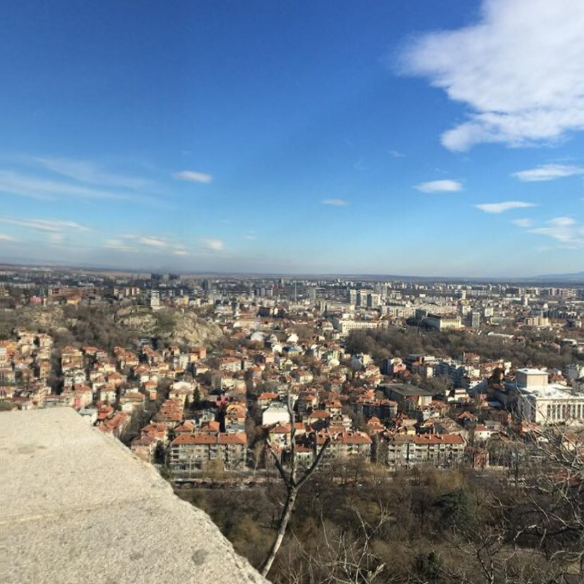
grace in Bulgaria. Grace Chung

BIO

  • Grace was born in Korea and immigrated to Pennsylvania as a child.
  • As a pastor’s wife, Grace directed Sunday school and ran special programs for special needs children at her home church in Yuong Sang Church.
  • Mother of two daughters, Miran and Liz.
  • Trained as an occupational therapist and now uses her training in her mission field to help people find dignity in life.
  • After the death of her husband, Grace found the strength to continue with her calling into the mission field abroad, which would take her away from her family and friends.
  • Grace has served in Plovdiv, Bulgaria since 2017.
  • She is part of the church-revitalizing team in post-communist, free Bulgaria.
  • Local churches are supported through teaching, preaching, discipleship, and community mercy outreach.
  • Grace enters the disability community, partnering with the local churches and nationals to be a tangible evidence of Christ’s love.

PRAY for Grace

  • Her church in Plovdiv, Bulgaria–First Evangelical Church of Plovdiv–and the church plant in West Plovdiv.
  • The transformation and reconciliation to God for the lost and the hurting of Plovdiv.
  • That she will continue to stay connected to the community during Covid19 social distancing.
  • She needs creative ways to stay connected with the children in the orphanage.
  • That God will continue to use her mightily for the advancement of His Kingdom in Bulgaria.
  • God will guard her from loneliness– esp. due to the isolation that is forced upon her during this pandemic.
  • That peace of God will protect her and comfort her and strengthen her every day.

LINKS to support Grace

https://www.mtw.org/missionaries/details/chung-grace

https://www.facebook.com/groups/651061988693501

WISDOM AND WEALTH: DISCUSSION/REFLECTION QUESTIONS

Please use the following questions to aid in your own personal meditation on wisdom and wealth in Proverbs as well as for your group discussion.You can find the talk on our YouTube page: https://youtu.be/agKaQ9Pxj5g

Remember that as a group you do not have to cover all of these questions. Set a time limit and stick with it! And please don’t sacrifice time for sharing prayer requests and praying for one another.

Personal Reflection/Group Discussion Questions:

  1. What stood out to you most about the teaching? What was most challenging, confusing, convicting or clarifying to you?
  2. What is your personal story/past experience with money? How do you think that has shaped your view of wealth more than the Bible’s view of it? (Or how does the Bible challenge your view of wealth?)
  3. How has money’s grip over you manifested itself in your life? Were those negative or positive consequences? Share. Is there a way that the loosening of money’s grip in your life has had certain consequences? Share.  
  4. Which of the areas of spending/giving best describes your practice (church, missions, justice/mercy, self, family, friends/community)? Which least describes you? Which do you want to work on the most and what do you hope that’ll accomplish?

Sermon Reflection/Discussion Guide (Ecclesiastes 5:1-7)

“Worship Under the Sun”

Scripture: Ecclesiastes 5:1-7

Sermon Summary

The purpose of our weekly gatherings is to worship God. So in what ways do we ready ourselves to worship him? The Preacher says to “Guard your steps when you go to the house of God” (5:1) which means we need to prepare our hearts as we enter into God’s presence. When we come to worship God, we are entering the Holy of Holies through Christ who has torn the veil separating us from God. In coming before him verse 1 tells us that God doesn’t want mere empty religious formalism (“the sacrifice of fools”) but he wants our hearts (“to draw near to listen”). We cannot afford to gain the applause of man but lose the audience of God. Remember the words of God in 1 Samuel that “man looks on the outward appearance, but the Lord looks on the heart.” So we should prioritize preparing our hearts to worship God. 

A humble worshipper who recognizes what’s taking place in worship will let their words be few. They won’t be chatty or babbling in God’s presence because they recognize and realize that in worship, earthly man communes with heavenly God. The Infinite One and the finite share a moment in space and time. The Holy One stoops to be with the sinful. We must remember that God is in heaven and we are on earth in order to understand and feel the reverence with which we approach God. This formality doesn’t kill intimacy with God but seeks to preserve it. God allows us to call him Abba Father but he also calls himself a consuming fire. We worship on the terms that God allows, not on the terms that we insist. 

God also detests unfaithful worshippers who come before him making all kinds of propositions and promises and fail to keep their vows. In fact, God says it’s better not to even make the vows because he’s never asked for them in the first place! Those who come to worship God and make vows in the hopes that God will do something for them are engaged in religion-centered worship. This is different than gospel-centered worship which is worship always in response to what God has already. God has kept his vow by sending his Son into the world in order to bridge the chasm between God in heaven and us on earth caused by our sin. The gospel says God came from heaven to earth to die so that we could go from earth to heaven to live. And in response to God’s sacrifice, we respond with our utmost worship. We take worship seriously because we take God’s sacrifice seriously. 

Group Discussion Questions

  1. Share something you found either interesting, memorable, convicting, confusing or challenging about the passage/sermon.  
  2. How can you “guard your steps” in coming into Sunday service? What distracts or prevents you most from preparing your heart to worship God? 
  3. What have you found helpful in your preparation for worship? 
  4. Do you often think about coming before God in fear and reverence or are you more concerned with something else? What helps stir and sustain reverence for God in worship?
  5. Is it difficult or easy to have an attitude and approach of reverence in coming to worship? What contributes to that? 

Sermon Reflection/Discussion Guide (Philippians 4:10-20)

“Fruitful Partnership”

Scripture: Philippians 4:10-20


1. Warm-up question: What are some questions you ask before investing your money? What are some of the red flags you look out for? Can we apply this same method or the same set of questions as we invest in the gospel? 


2. The Philippian church was the ONLY church that invested in the gospel. How can we gauge how we’re doing regarding our investment in the gospel? Is there a measuring stick we can use? 

What about on a personal level? Is there room in your budget to support missionaries? Are you currently supporting missionaries/organizations? Do you feel like it’s a partnership? What is the relationship like?


3. Today’s message emphasized the benefit of investing for heavenly rewards, but what are some of the rewards we can reap now when we invest in the gospel?


4. Paul says he didn’t seek the gift, but he seeks the fruit that increases to your credit. It’s highly doubtful that the Philippian church was proving for Paul because of the rewards waiting for them. The parable in Matthew 25 (the king rewarding his servants) comes to mind when we picture the generosity of the Philippian church. Are rewards necessarily a bad motivator to invest in the gospel? 

WISDOM AND WORK: DISCUSSION/REFLECTION QUESTIONS

Please use the following questions to aid in your own personal meditation on wisdom and words in Proverbs as well as for your group discussion. 

You can find the talk on our YouTube page: https://www.youtube.com/watch?v=Cf9wVAKjc3k&t=738s

Remember that as a group you do not have to cover all of these questions. Set a time limit and stick with it! And please don’t sacrifice time for sharing prayer requests and praying for one another.

Personal Reflection/Group Discussion Questions:

  1. What stood out to you most about the teaching? What was most challenging, confusing, convicting or clarifying?
  2. Share with each other the main work you are presently responsible for and engaged in. 
  3. Would you consider yourself diligent in your work? Would others consider you diligent? What kind of Christian witness do you think this gives to people?
  4. What is your attitude and approach toward work? Do you tend toward idleness in work (sluggard to work) or idolatry of work (slave to work)? Share your struggles with work. 
  5. What other implications can you derive from the fact that God was the first worker and that our work is patterned after God’s? What practical difference does this make in our work?

SERMON REFLECTION/DISCUSSION GUIDE (Ecclesiastes 1:12-18)

“Wisdom Under the Sun”

Scripture: Ecclesiastes 1:12-18

Sermon Summary

The main point of our passage is summed up in this verse, “For in much wisdom is much vexation, and he who increases knowledge increases sorrow” (1:18). This is an interesting sentiment the Preacher introduces because it stands so opposed to what the book of Proverbs tells us. There we are told, “Blessed is the one who finds wisdom, and the one who gets understanding” (3:13). How are we supposed to reconcile this seeming contradiction in the Bible?

Proverbs and Ecclesiastes are both books belonging to the genre of wisdom. Together they offer a balanced view of life. Proverbs tells us how the world is supposed to be and how God designed it to be good. Ecclesiastes tells us what the world is actually like now that it’s under the curse of sin. If Proverbs tells us all the rules of the world, Ecclesiastes tells us all the exceptions to the rules and the exceptions to the exceptions. Both perspectives together remind us that we live in a time between the world as it presently is and the world as God is making it. This is life under the sun. 

When it comes to pursuing wisdom and gaining understanding, we should not reject it but recognize its limitations. There are so many things to be informed about and new things to learn and it seems so unending. But will wisdom and understanding really make our lives better? Does it give meaning to our suffering? Does it fix the problem of sin in our hearts? Despite all the wisdom, learning and discoveries of man, we cannot reverse the curse of sin in the world. Wisdom derived from under the sun can never adequately address the problems of life under the sun. Earthly wisdom must give way to eternal wisdom, wisdom that comes from beyond the sun. And this is where the gospel holds forth the good news for us.

1 Corinthians 1:24 tells us that Christ is the wisdom of God. Jesus does not just have wisdom but he is wisdom itself. Therefore the wisdom that can fix the world is not a possession to have but a person to trust in. God’s wisdom came from beyond the sun to us in the Son. And he looked like foolishness to the world when he died on the cross. But his death was how Jesus broke the power of sin over the world. He endured the weight of sin’s curse in order to lift the curse off the world and begin to fix it. Since only Jesus can heal the world, we should not strive after the earthly wisdom but pursue eternal wisdom in Christ. We must look to the wisdom of the Son and not to wisdom under the sun. 

Group Discussion Questions

  1. Share something you found either interesting, memorable, convicting, confusing or challenging about the passage/sermon.  
  2. Are you drawn more to the message of Proverbs or Ecclesiastes? How does the message of both wisdom books give you the most balanced, honest view of the world?
  3. About what kind of things do you feel the pressure to be up to date and informed about? Have you ever pursued wisdom, knowledge and understanding  only to conclude that it led to vexation and sorrow? 
  4. What are some things about which people hope the wisdom under the sun is the answer for? Share some examples where the eternal wisdom of Christ is the answer and the earthly wisdom of man is not.  

SERMON REFLECTION/DISCUSSION GUIDE (Mark 4:35-41)

“Rest and Faith’s Expression”

Scripture: Mark 4:35-41

Sermon Summary

Sometimes it’s difficult to enjoy and experience the God-given gift of sleep and the rest God intends to give us in it. When the Bible speaks to this issue, it does not offer us sleep techniques but it seeks to get to our hearts. What we learn is that sleep is ultimately an expression of faith. Sleep is a defiance on the one hand and a submission on the other. It’s a defiance against our own self-sufficient, autonomous nature and it’s an act of submission to the sovereign hand of God. 

When Jesus calmed the storm in Mark 4 it was in the evening, a time when everybody should have been asleep. However because of the storm, sleep eluded the disciples and they were kept from resting that night. Fear filled their hearts as water filled the boat. Jesus rebukes the storm and turns to ask them, “Why are you so afraid? Have you still no faith?” He wasn’t downplaying the terror of the storm but questioning why they didn’t trust in him after all they had seen him do and heard him teach. Their sleeplessness was due to struggling faith. 

Often we are kept up in our anxieties and worries because like a balance scale, the reasons we have to fear outweigh the reasons to trust God. When we begin to follow the trail of “what if’s” in our heads, we go down a dangerous path. We add speculation upon speculation. In the end what’s really going in our hearts is that we are doubting the goodness, the wisdom and the power of God. Like the disciples, we wonder if God cares about us at all. But something begins to happen when you replace the “what if’s” with the definitive truth of “what happened.”

So what happened? Mark 4 is contrasted against Mark 14. In Mark 4 the disciples rebuke Jesus for sleeping in the boat but in Mark 14 Jesus rebukes the disciples for sleeping in Gethsemane. In Mark 4 Jesus slept as the disciples faced the storm and cried out but in Mark 14 the disciples slept as Jesus faced the cross and cried out. Jesus slept in the storm but trembled at the cross because he knew weather and water were not to be feared. It was God’s wrath against our sin that was truly dreadful. But Jesus took that for us. He died in our place on the cross and removes greatest reason to be afraid. Now through his sacrificial death he also gives us the greatest reason to trust him. He mercifully and unconditionally loves us.

When we preach the gospel to ourselves, we remember that because of Christ’s sacrifice on Golgotha’s cross we can experience sleep in Galilee’s seas. So our displays of faith in God are not just through extraordinary acts of obedience but can be evidenced in the everyday ordinary act of going to bed. We sleep trusting that God is working all things for our eternal good and his endless glory. 

Although sleeplessness can be a sign of lack of faith in God, so can loving and cherishing sleep too much. Sometimes faith in God can be replaced with faith in sleep where we look to sleep to escape our worries and our fears. Sleep then turns into an idol. When we long for our beds in order to give us rest from the hassles and hardships of life, we are looking to sleep to give us something only God can give us. Faith needs to be shifted again to God. 

Group Discussion Questions

  1. Share something you found either interesting, memorable, convicting, confusing or challenging about the passage/sermon.  
  2. Which tends to be your greater struggle: experiencing sleeplessness/restlessness or loving/enjoying sleep too much? What kinds of things give you anxiety and keep you up at night? What kinds of things do you want to escape from in sleep? 
  3. What other beliefs do you have in your heart when you feel afraid, anxious and worried? In those moments, what are you believing about yourself and what are you not believing about God? 
  4. Share what you learned from this series on “The Best Rest” or any testimony of your experience of rest as a result of this series. Have you developed any new insights or perspectives? 

Wisdom and Words: Discussion/Reflection Questions

Please use the following questions to aid in your own personal meditation on wisdom and words in Proverbs as well as for your group discussion. 

You can find the talk on our YouTube page: https://youtu.be/AQpsGxsnrfo

Remember that as a group you do not have to cover all of these questions. Set a time limit and stick with it! And please don’t sacrifice time for sharing prayer requests and praying for one another.

Personal Reflection/Group Discussion Questions:

1.     What stood out to you most from the teaching?

2.     How have you spoken words that tear down or how have you spoken words that give death? What do your words reveal about your heart? (Ex: The idolatries you are seeking, etc.).

3.     Brainstorm how you would like to speak words that give life in one or all of these circles: family, church, friends, work, community.

4.     If you have time: What is one way that God has spoken words of life into your life? Or is there an area of your life where you feel the need for his life-giving words?

5.     Ask for prayer in an area of your life where you are tempted to speak words that tear down rather than build up. Pray that your heart would be oriented to Christ and that your words would give life.

Sermon Reflection/Discussion Guide (Deuteronomy 5:12-15)

“Rest and Gospel Freedom”

Scripture: Deuteronomy 5:12-15

Sermon Summary

According to the Bible, God established a pattern involving six days of labor and a seventh day of rest. This pattern of a “week” forms the rhythm for the rest of our lives. This means the Sabbath never just ends a week but the Sabbath also always starts a new week. So then the Sabbath gives you rest after a completed week of work but it also recharges you for an upcoming week of work. When God established a Sabbath year for the land, his purpose was to give the land rest to ensure future years of fruitfulness. In the same way, the weekly Sabbath for us also recharges us for the start of another fruitful week of labor. The Sabbath gets us ready for every new work week. 

In Romans 1 Apostle Paul tells us that one aspect of fallen humanity is that we turn things into idols. One of the biggest idols of our age is work and career. Work becomes so much more tiring than it should be because we look to our work to give us something it cannot. We often look to work for security, worth, identity and affirmation. As a result, we are constantly tired, anxious and stressed during the work week. Work is never just work. We try to find significance from it. As a result, rest escapes us. But keeping the Sabbath can help combat this temptation. 

The Ten Commandments are recorded twice in the Bible. First in Exodus 20 and again in Deuteronomy 5. Whereas Exodus 20 says we should keep the Sabbath because God rested on the seventh day, Deuteronomy 5 says we should keep the Sabbath because God delivered Israel from slavery in Egypt. The grounds for keeping the Sabbath in Exodus is creation but in Deuteronomy it’s redemption. As Israel got ready to enter the Promised Land,Moses didn’t want the Israelites to forget God’s great redemption and so he attached it to the Sabbath. Remembering the exodus event on every Sabbath, the Israelites would have a weekly reminder that they were no longer slaves but redeemed by God. The Sabbath was a weekly declaration of freedom from their once enslaved identities. 

As Christians we’ve experienced a greater redemption than the Israelites. We were once enslaved to sin but Christ set us free from it. He broke the power and grip of our idolatries over us so that we no longer need to work for our identity, worth and significance but we receive it freely in Christ. This is what gospel freedom looks like. It means resting in Christ’s work for us. When we remember the gospel every Sabbath, it helps us begin our weeks freed from the pressure to prove or earn anything. Instead we begin the work week already confident in God’s acceptance of us in Christ. This means that work becomes just work. We don’t need to work for our identity but instead we can work out our identity. The freedom of the gospel helps the work week become so much more restful as a result. 

Group Discussion Questions

  1. Share something you found either interesting, memorable, convicting, confusing or challenging about the passage/sermon.  
  2. Do you tend to treat Sunday as the first day of the week or the last day of the week? What affect do you think that’s made in your life? On your perspective of the week?    
  3. What does your current practice of Sabbath look like? How do you usually spend the day? What is beneficial about it and what is not? 
  4. In what ways do you look to your work to give you something it can’t or wasn’t meant to give you? What are you hoping to get from your work? What does freedom in the gospel look like for you?